
Maximizing Social Security in 2026: A Strategic Guide to Benefit Claims, Taxes, and Timing
By Chris Chen, CFP®
Last updated: October 2026
Regardless of means, Social Security remains the cornerstone of most Americans’ retirement income. Of course, it is critical for people who don’t have many assets, but it is also important for those with a nice 401(k) or IRA balance. As illustrated by the graph below, it even remains important for those who could live without it, like people with a household income over $200K
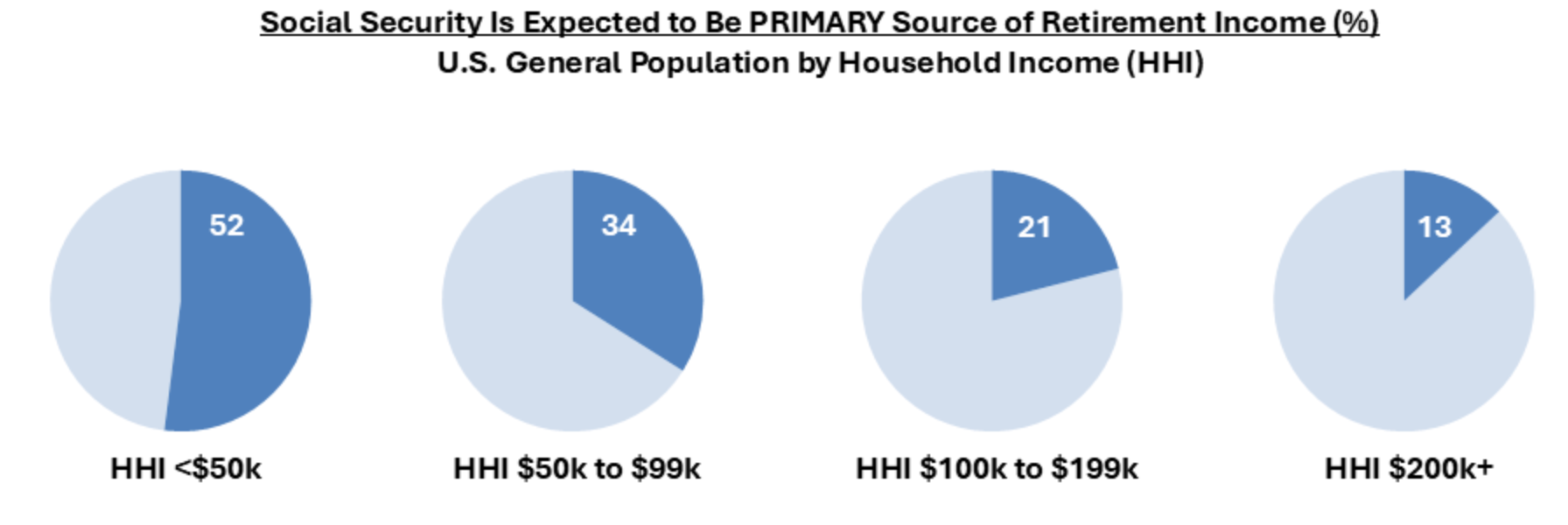
Source: Social Security Turns 90: The Cornerstone of Retirement Income, Transamerica Center for Retirement Studies, August 2025
However, navigating the rules, limits, and strategic options can feel like solving a complex puzzle. Claiming your retirement benefits is far from a “set-and-forget” decision—it is a highly personal financial strategy with multiple variables and long-term consequences.
Whether you are approaching retirement, continuing to work, or managing a business, here is an overview of the critical Social Security issues you need to consider in 2026.
1. Statement Accuracy & Eligibility Planning
Ensure you have an accurate foundation before devising a plan.
Verify Your Earnings Statement
Your earnings statement will be on your Social Security Statement. It can be found on your account on the Social Security Administration website. Your first step should always be reviewing your most up-to-date Social Security benefits statement. It is crucial to check the accuracy of reported income for all years of your work history, as any discrepancies could permanently reduce your payouts. If you find an error, report it immediately to the Social Security Administration (SSA).
Keep in mind that the Primary Insurance Amount (PIA), the amount you are entitled to collect at your Full Retirement Age, shown on your statement is an estimate that assumes you will continue working at your current income level until you file, and it does not account for future inflation adjustments.
The Eligibility Threshold
To qualify for retirement benefits, you need 40 Social Security credits, representing 40 quarters, or 10 years of work. If you are below the 40-credit mark, continuing to work may help establish minimum eligibility.
2. A Fork in the Road: File Early or Delay?
The age at which you claim your benefits is one of the most powerful levers in your retirement plan. You can claim as early as age 62, wait until your Full Retirement Age (FRA), or delay up to age 70.
When It Makes Sense to File Early
In general, filing early (you can file as early as age 62) is not advisable because it permanently reduces your lifetime benefits. However, early filing may be the right path if you face:
-
- Poor health or shorter life expectancy.
- Immediate cash flow needs.
- Being single with no dependents who rely on your benefit.
Many people will want to file early for a number of reasons. The most common are people who are retiring and no longer have earned income. They often feel the need to replace that income, even at the cost of a lower benefit.
However, if you file early, it will result in a permanent reduction in your monthly benefits with a potential lifetime cost in the six figures. Check with your Certified Financial Planner before filing early.
When It Makes Sense to Delay
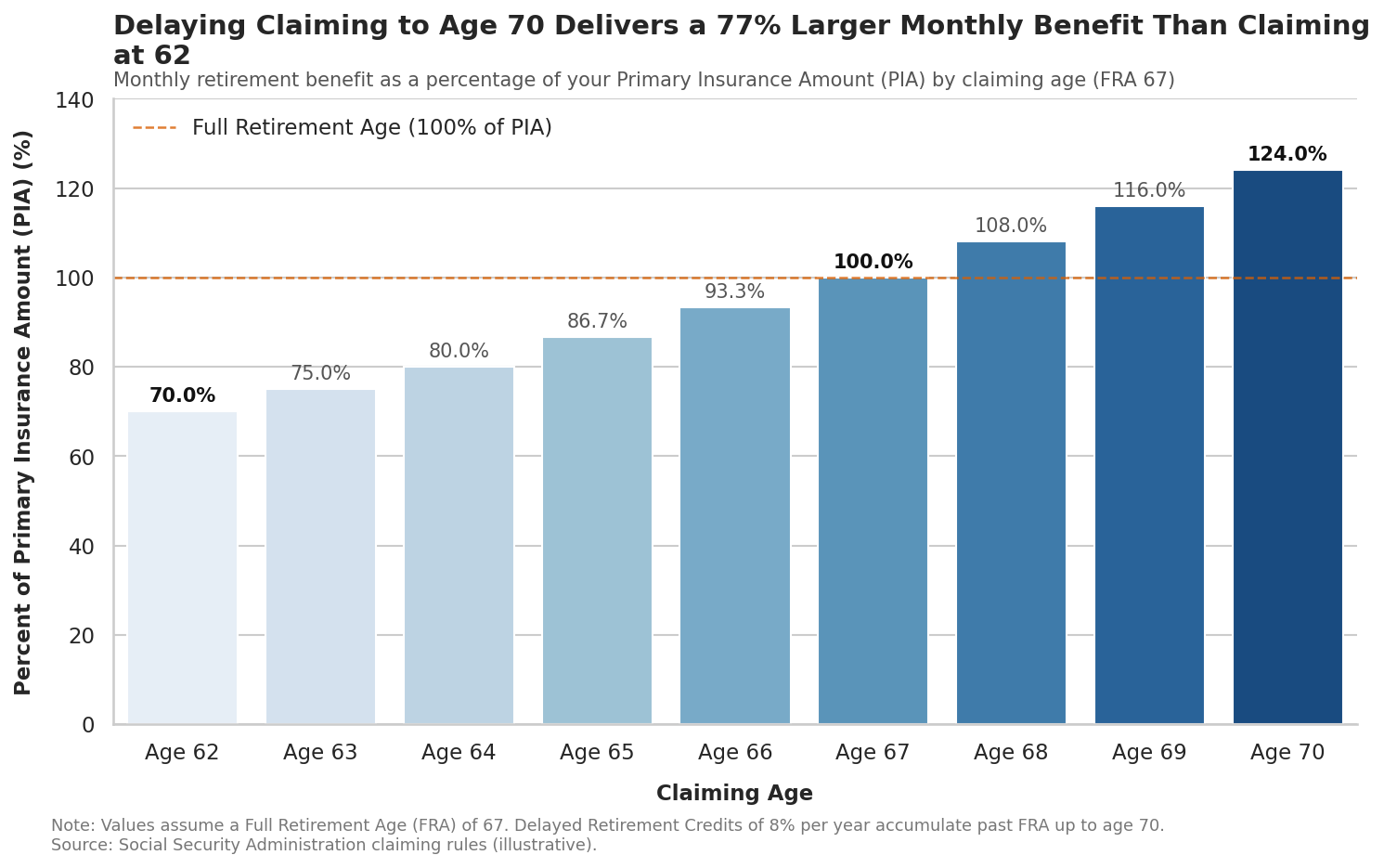
You can delay your claim past 62, and past your Full Retirement Age, up to age 70. Delay will increase your benefit by up to 8% per year plus inflation; in practice, this means a benefit increase of more than 10% per year. Delaying is often the optimal choice if you have:
-
- Good health and high longevity expectations.
-
- A spouse or dependents who would benefit from a higher survivor benefit.
-
- Enough savings or income to bridge the gap.
Delaying offers distinct financial advantages that traditional investment portfolios struggle to match, such as guaranteed, cost-of-living-adjusted (COLA) income and a highly attractive growth rate from Delayed Retirement Credits that act as a robust inflation hedge. Many people who delay collecting their benefits until age 70 find it highly beneficial when they reach 80 years of age.
Even if you feel that you will not live as long as hoped, or feared, if you have the higher benefit, it may make sense to delay anyway, as your spouse would then receive a higher survivor benefit. Depending on the case, it may make a significant difference in your family’s retirement well-being.
Having Second Thoughts?
If you file and later regret your decision, the SSA offers two primary safety valves:
-
- Within 12 months of claiming: You can submit a “withdrawal of application”. You must pay back all benefits received, but this allows your benefits to reset and resume growing as if you had never filed.
-
- At Full Retirement Age (FRA): If you have already reached your FRA, you can suspend your benefits to allow them to earn Delayed Retirement Credits again up until age 70, or choose a retroactive filing to claim a lump sum back to your FRA.
3. Working in Retirement & The Earnings Test
Many retirees choose to work part-time or consult after claiming benefits. However, if you claim benefits before reaching your FRA and continue to earn income, you must navigate the Earnings Test. In short, if you claim your benefits before FRA and you earn more than a certain amount, the SSA will cut your benefit by $1 for every $2 earned above the limit. Although you may be getting it back at FRA, if that is your case, think twice before claiming.
4. Spousal, Divorced, and Survivor Strategies
Social Security benefits are not just individual—they are a family asset. Coordinating claims with a spouse or ex-spouse can unlock significant lifetime income. There are a number of cases where it makes sense to check in with your Certified Financial Planner for the right strategy for your case. They include:
-
- A discrepancy in benefits and/or ages between spouses
-
- Timing of the spousal benefit
-
- The survivor benefit
-
- The divorced spouse benefit
-
- The deceased ex-spouse benefit
5. The Tax Trap: Protecting Your Benefits
Many retirees are shocked to discover that up to 85% of their Social Security benefits can be subject to federal income tax. You may work with your Certified Financial Planner to manage your taxable income so that it remains below the appropriate thresholds to avoid taxation of your benefit. You should note that reducing taxable income for one year, or a few, may be feasible. However, doing so year after year is more difficult. It requires more strategic planning in the years before you start collecting your Social Security retirement benefits. After all, the goal is not to reduce taxes on SS income per se, it is to reduce your lifetime income taxes.
Social Security is an integral part of retirement at all income levels. The decisions you make when claiming your benefit can increase or decrease your lifetime income by amounts in the six figures. Therefore, it makes sense to coordinate your benefits with your assets and your other income sources to maximize your lifetime income from all sources. That begins with a financial plan. Have you updated yours recently?